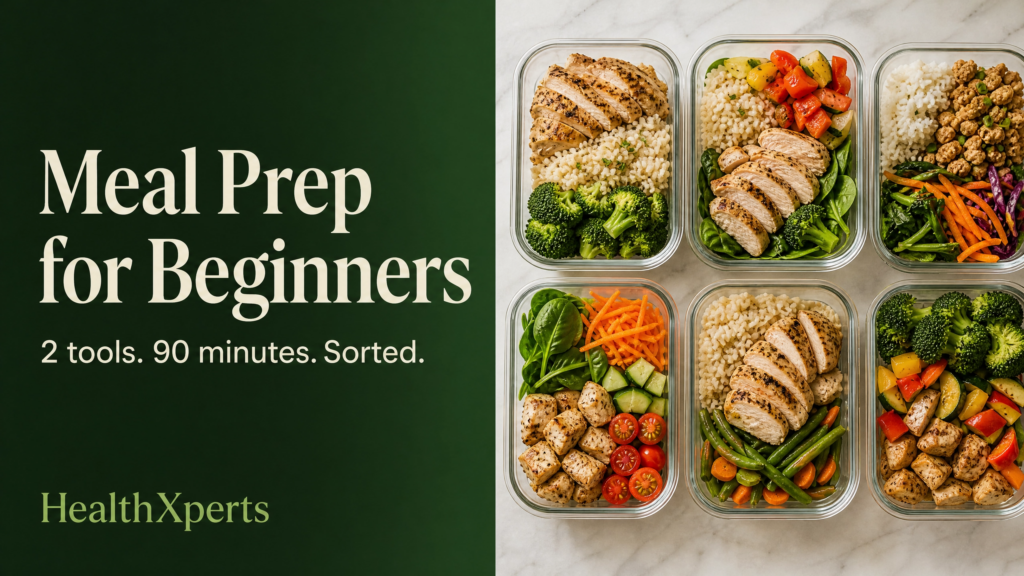
A lot of people start meal prep and stop after a week or two. Not because the cooking is hard. Because the system falls apart.
The containers leak. The portions are wrong. Monday’s lunch looks fine but Wednesday’s is a soggy mess. By Thursday you’re back to grabbing whatever is closest.
The fix is simpler than most guides make it. Two tools. One afternoon. A fridge full of meals that actually last the week.
As an Amazon Associate I earn from qualifying purchases. This post contains affiliate links. If you purchase through these links I may earn a small commission at no extra cost to you.
Why Most Meal Prep Fails
People blame willpower. It’s almost never willpower. It’s logistics.
Three things kill a meal prep routine:
1. Wrong containers. Lids that don’t seal. No compartments, so your rice soaks up your sauce by Tuesday. Containers that warp in the microwave or take up the entire fridge. You spend more time fighting the storage than preparing the food.
2. Guessed portions. You eyeball the chicken. You estimate the rice. By Friday, some meals have too much and others have too little. Research suggests most people underestimate how much they eat by roughly a quarter. Without measuring, your prep is consistent in effort but inconsistent in results.
3. Overcomplicating it. Seven different recipes for seven days. Colour-coded labels. Instagram-perfect layouts. That’s a hobby, not a system. A system is boring, repeatable, and done in under two hours.
Fix the first two and the third takes care of itself. That means two purchases, both under a tenner each.
The 2 Tools You Need
vivigu Meal Prep Containers
BPA-free | Microwave, freezer & dishwasher safe | Stackable with lids
Food-grade PP plastic rated from -40°C to 160°C. That means they go straight from freezer to microwave without warping. Lids seal tight, so nothing leaks in your bag or your fridge. Dishwasher safe for easy cleanup.
Stackable, so five of them take up about as much fridge space as a large Tupperware box. Most beginners need five containers for weekday lunches or dinners. That’s one prep session covering five meals.
Tip: If you want your protein, carbs, and vegetables kept separate in one container, look for vivigu’s 2-compartment version or pick up a set of 3-compartment containers alongside these. Keeping wet and dry foods apart means better textures by day two.
Check Price on Amazon →Nicewell Digital Kitchen Scale
Accurate to 1g | Tare function | Reads grams, ounces, and millilitres
A food scale turns guesswork into precision. Weigh 150g of chicken into each container. Weigh 200g of rice. Now every meal has the same amount of protein and carbs. No counting calories. No measuring cups. Just a number on a screen and consistency across the week.
The tare function is what makes it practical. Place the container on the scale, press tare to zero it out, then add the food. No maths. No transferring between bowls.
Reads in grams, ounces, and millilitres. Accurate to 1g. Slim enough to slide into a kitchen drawer.
Check Price on Amazon →Want the full meal plan to go with these?
The free 28-Day Home Fitness Blueprint includes a nutrition guide with exact portions for each meal. Designed around this exact setup.
Download the Free Blueprint →The Sunday Routine: 90 Minutes, 5 Meals
Here’s what a basic prep session looks like. No chef skills required.
Step 1: Pick one protein, one carb, two vegetables. Chicken thighs, rice, broccoli, and peppers. That’s it. Don’t overthink it. Variety comes later, once the habit is locked in.
Step 2: Cook in bulk. Season the chicken, bake on a tray. Boil the rice. Steam or roast the vegetables. Everything cooks at the same time. Total active time: about 15 minutes. Waiting time: 30-40 minutes.
Step 3: Weigh and portion. Place each container on the scale. Tare it. Add 150g chicken to one side. Tare again. Add 200g rice. Add your vegetables. Repeat five times.
Step 4: Stack and store. Lids on. Stack in the fridge. Two meals in the main fridge section (Monday and Tuesday). Three in the freezer (Wednesday to Friday, move each one to the fridge the night before).
Total time: about 90 minutes. For the full process with recipes and a shopping list, read our step-by-step 90-minute meal prep guide.
How Much Protein Per Meal?
If you’re working out at home with dumbbells, you need more protein than you think. Multiple meta-analyses point to around 1.6 grams per kilogram of body weight per day as the sweet spot for people who strength train. Above that, the evidence for extra benefit drops off sharply.
For a 70kg person, that’s roughly 112g of protein per day. Across three meals and a snack, that’s about 28-35g per meal. A 150g portion of cooked chicken breast gives you roughly 48g of protein. A tin of tuna gives you about 25g.
This is where the scale earns its keep. Guessing 150g of chicken is surprisingly hard. Most people serve themselves either 100g (not enough) or 250g (too much for one meal, not enough left for Friday). The scale keeps every meal even. For a deeper dive, read our full guide on protein needs for home workouts.
What You Don’t Need
A quick list of things people buy for meal prep and never use:
- A label maker. You’re prepping five identical meals. You’ll remember what’s in them.
- Glass containers. Heavier, more expensive, and they shatter if you drop them. BPA-free plastic does the job and survives a kitchen floor.
- A vacuum sealer. Useful for freezing meat in bulk. Overkill for weekly meal prep. The containers seal well enough for five days.
- Supplements. Fix your meals first. Protein powder fills gaps, it doesn’t replace food. If your prep covers around 30g of protein per meal, you probably don’t need it.
Common Questions
How long does prepped food last in the fridge?
The Food Standards Agency says cooked leftovers should be eaten within two days of cooking. That’s why the routine puts Monday and Tuesday in the fridge and freezes the rest. Move a frozen meal to the fridge the night before you need it. Rice is the exception: eat it within one day of cooking or freeze it straight away.
Can I prep the same meals every week?
Yes, and you should at first. The point is building the habit, not impressing anyone. Once you’ve prepped four or five Sundays in a row, start swapping one ingredient at a time. Chicken becomes salmon. Rice becomes sweet potato. But the system stays the same.
Do I need to prep every meal?
No. Most beginners prep lunches only. That’s the meal most likely to go wrong (grabbing a sandwich, skipping it entirely, or eating too much). Breakfast and dinner are easier to handle fresh because you’re at home.
What if I don’t eat meat?
The system works the same. Swap chicken for tofu, tempeh, chickpeas, or lentils. The scale is even more useful here because plant protein sources are less dense, so accurate portions matter more. See our guide on what to eat around workouts for more options.
How This Fits Into the Bigger Picture
Meal prep is one piece of a home fitness setup. Your training handles the work. But what you eat determines whether you actually see the results.
If you’ve already got dumbbells and a plan, this is the piece that makes your results visible faster. You can train perfectly and still not see changes if your eating is inconsistent. Prep fixes that.
For the full setup, including training equipment and progress tracking tools, see our complete home gym starter kit.
Ready to start prepping?
Download the free 28-Day Home Fitness Blueprint. It includes a nutrition guide with exact portions, a shopping list, and a day-by-day schedule that pairs your workouts with your meals.
Download the Free Blueprint →HealthXperts provides general fitness information for healthy adults. This is not medical advice. If you have a health condition, injury, or are recovering from surgery, speak to your GP or physiotherapist before starting any exercise programme.