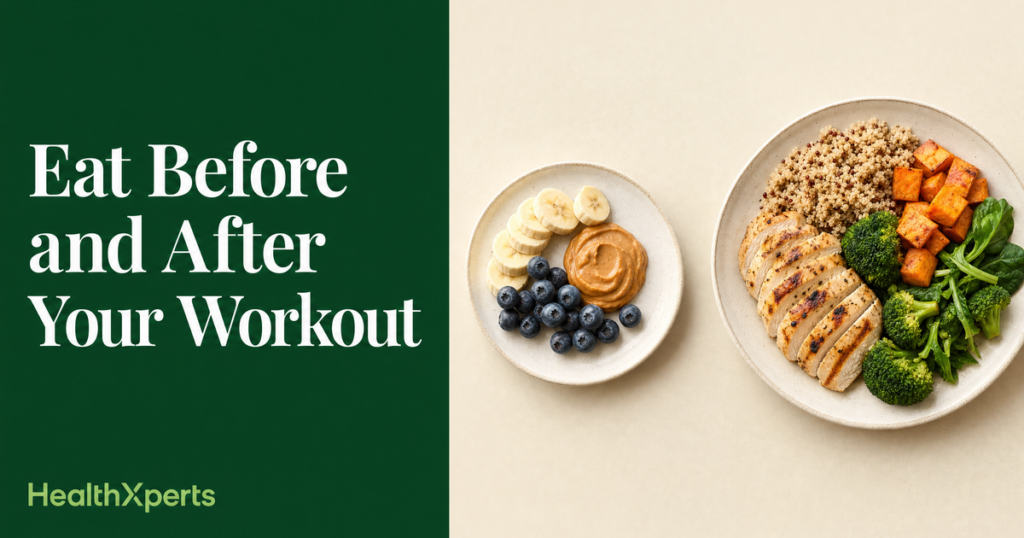
What you eat around your home workout matters more than most people realise.
Train on empty and you’ll feel sluggish halfway through. Eat the wrong thing too close to training and you’ll feel bloated and uncomfortable. Ignore post-workout nutrition and your muscles take longer to recover, meaning you’re not ready for your next session.
The good news is that getting this right doesn’t require complicated meal plans or expensive supplements. A few simple principles, applied consistently, make a real difference.
Here’s exactly what to eat before and after a home workout. With practical meal ideas you can use straight away.
What to Eat Before a Home Workout
The goal of your pre-workout meal is simple: give your body the fuel it needs to perform. That means carbohydrates for energy and a moderate amount of protein to support your muscles during the session.
Fat and fibre slow digestion, so you want to keep both relatively low in your pre-workout meal, especially if you’re eating close to training time.
Timing Your Pre-Workout Meal
- 1–2 hours before: You have time for a proper meal. Something with carbs, moderate protein, and low fat
- 30–60 minutes before: Keep it light. Something easily digestible like a banana or a small yoghurt
- Under 30 minutes before: A small piece of fruit is fine, or train fasted if you feel comfortable doing so
Best Pre-Workout Meals (1–2 Hours Before)
- Porridge with banana and a handful of berries. Slow-release carbs from the oats, quick energy from the banana, easy to digest
- Rice cakes with peanut butter and sliced banana. Light, quick to prepare, good carb and protein balance
- Chicken and rice. A classic for good reason. Lean protein, easily digestible carbs, low fat
- Greek yoghurt with honey and granola. Protein from the yoghurt, carbs from the honey and granola
- Wholegrain toast with eggs. Simple, filling, and well-balanced. Two eggs on two slices of toast covers both macros well
Quick Pre-Workout Snacks (30–60 Minutes Before)
- A banana
- A small pot of Greek yoghurt
- A handful of dates
- A rice cake with a thin spread of peanut butter
- A small glass of fruit juice with a handful of nuts
What to Avoid Before Training
- High-fat meals. Fatty foods take longer to digest and can cause discomfort during exercise
- Very high-fibre foods. Large amounts of fibre can cause bloating and cramping during training
- Large portions. Eating a big meal within an hour of training is a recipe for feeling heavy and sluggish
- Carbonated drinks. The gas can cause discomfort during exercise
Should You Train Fasted?
Training fasted. Typically first thing in the morning before eating. Is a common approach, particularly for people who struggle with food before early sessions.
For low-to-moderate intensity home workouts, fasted training is generally fine. Your body has glycogen stored from the previous day that can fuel a 20–30 minute session.
For longer or more intense sessions, eating something beforehand will improve your performance, especially if you’re working toward muscle building rather than just general fitness.
The bottom line: if you feel good training fasted and you’re seeing results, stick with it. If you feel weak or dizzy, eat something small beforehand.
🎯 Want a complete beginner plan?
The free 28-Day Home Workout Blueprint includes a full nutrition guide, workout schedule, and everything you need to get started.
Get the Free Blueprint →What to Eat After a Home Workout
Your post-workout meal is where recovery begins. During training, your muscles use up glycogen (stored carbohydrate) and develop small tears that need repair. Your post-workout meal addresses both.
You need two things after training:
- Protein. To repair and build muscle tissue. Aim for 20–40g
- Carbohydrates. To replenish glycogen stores and support recovery
Try to eat within 2 hours of finishing your workout. You don’t need to rush to the kitchen the moment you put the dumbbells down, but don’t leave it 5 or 6 hours either.
Best Post-Workout Meals
- Grilled chicken with sweet potato and vegetables. A well-rounded recovery meal with lean protein, complex carbs, and micronutrients
- Salmon with rice and steamed broccoli. Salmon provides protein and omega-3 fatty acids, which help reduce exercise-related inflammation
- Scrambled eggs on wholegrain toast with avocado. Quick to make, good protein from eggs, carbs from toast, healthy fats from avocado
- Tuna pasta with a light tomato sauce. High protein, good carbohydrate source, easy to batch cook
- Greek yoghurt with fruit and granola. Works well as a lighter post-workout option if your main meal is later
- Protein smoothie with banana, oats, milk and peanut butter. Fast to prepare, easily digestible, good macro balance
Post-Workout Hydration
Don’t forget fluids. Even a moderate home workout causes you to lose water through sweat. Dehydration, even mild. Slows recovery and affects how you feel for the rest of the day.
Drink at least 500ml of water in the hour after your workout. If your session was particularly intense or you sweated heavily, add an electrolyte tablet or a pinch of salt to your water to replace what was lost.
A Simple Daily Structure
Here’s what a typical training day could look like, built around a mid-morning workout:
- 7:00am. Wake up, glass of water
- 8:00am. Pre-workout meal: porridge with banana and Greek yoghurt
- 9:30am. 20-minute dumbbell workout
- 10:00am. Post-workout: scrambled eggs on wholegrain toast
- 1:00pm. Lunch: tuna rice bowl with salad
- 4:00pm. Snack: cottage cheese with fruit
- 7:00pm. Dinner: chicken, sweet potato, and vegetables
This structure keeps protein spread throughout the day, fuels training properly, and supports overnight recovery. You don’t need to follow it exactly. Use it as a template and adapt it to your own schedule.
Frequently Asked Questions
Do I need a protein shake after my workout?
No. A protein shake is convenient but not necessary. Any meal containing 20–40g of protein within 2 hours of training achieves the same result. Whole food sources like eggs, chicken, fish, or Greek yoghurt work just as well.
What if I train late at night?
Eat a protein-focused meal or snack after training, even if it’s late. Skipping post-workout nutrition because it’s close to bedtime is a common mistake. Your muscles repair overnight. They need protein to do that. A light option like Greek yoghurt or cottage cheese works well without being too heavy before sleep.
How long before a workout should I stop eating?
A large meal needs at least 2 hours to digest. A small snack is fine 30–60 minutes before. If you eat too close to training and feel uncomfortable, move your meal earlier next time.
Does it matter what I eat on rest days?
Yes. Your muscles continue to repair on rest days, so protein intake remains important. You may need slightly fewer calories overall (since you’re not burning as much through exercise), but don’t drastically cut back on rest days. Recovery still requires fuel.
Final Thoughts
Getting your pre- and post-workout nutrition right doesn’t require perfect planning or special foods. It comes down to two simple habits. (If you want to batch the work, our meal prep for beginners guide sorts a full week in 90 minutes.) eat something with carbs and protein before you train, and eat something with protein and carbs after.
Do that consistently, stay hydrated, and your body will have everything it needs to perform and recover well.
Want to understand protein intake in more detail? Read our post on how much protein you need for home workouts.