You don’t need to spend a fortune to get fit at home. A single pair of dumbbells is enough to run a full 28-day beginner programme, but choosing the wrong ones leads to frustration, wasted money, or worse, injury.
This guide cuts through the noise. We’ve broken down exactly what to look for, what to avoid, and which options give you the best results for your budget.
This post contains affiliate links. If you purchase through these links I may earn a small commission at no extra cost to you.
Our Top Pick
🏋️ PAPABABE HEX Dumbbells
⭐⭐⭐⭐⭐ 4.7 stars | 3,390+ reviews | Amazon’s Choice | From £17.09 a pair
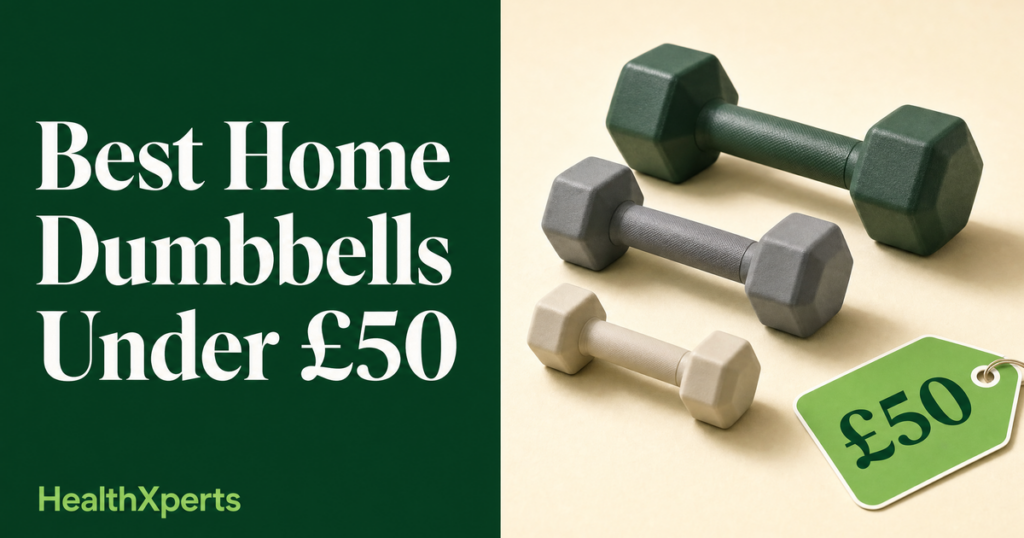
Rubber hex ends, solid grip, accurate weight, and the strongest review record of any pair we checked under £50. If you only read one section of this guide, this is the pair to buy.
Check Price on Amazon →Fixed vs Adjustable Dumbbells: Which Is Right for Beginners?
This is the first decision most beginners get wrong. Here’s the simple answer:
Fixed dumbbells (one weight, can’t change). Best for beginners. Cheaper, simpler, no setup time. Buy a pair at your starting weight and one pair heavier for when you progress.
Adjustable dumbbells (dial or pin system). Better long-term investment but cost more upfront. Worth it if you want to avoid buying multiple pairs as you get stronger.
What to Look for When Buying Dumbbells
- Grip texture. Knurled or rubberised handles prevent slipping, especially when your hands get sweaty mid-workout.
- End cap style. Hex (six-sided) ends stop dumbbells rolling away when you set them down. Round ends roll. Always buy hex.
- Coating. Rubber-coated heads protect your floor and reduce noise. Bare cast iron scratches floors and is loud on hard surfaces.
- Weight accuracy. Cheaper dumbbells are sometimes 5–10% off their stated weight. Reputable brands are accurate.
- Handle diameter. 28–32mm is ideal for beginners. Thicker handles (34mm+) are harder to grip and cause forearm fatigue.
Ready to start training once you’ve got your dumbbells?
Grab the free 28-Day Home Fitness Blueprint. A complete beginner plan that works with any pair of dumbbells.
Download the Free Blueprint →Other Solid Options
If PAPABABE isn’t available or you want to compare, these two are worth knowing about — neither matches its review record, but both are honest, well-made choices.
York Fitness Cast Iron Hex Dumbbells — Best Budget Pick
Available in pairs: 2–20kg | £12–£28 per pair
York Fitness is a long-established UK brand with solid quality control. The cast iron hex range is uncoated but accurate and well-balanced. Best used on a mat to protect floors. No rubber coating means it’s noisier and can scratch bare floors, and the handle can feel rough without gloves. Best for beginners on a tight budget who have a mat or carpeted room to train on.
Pro Fitness Adjustable Dumbbell Set — Best Adjustable Under £50
Adjustable 2–10kg per dumbbell | £35–£45 per set
The best adjustable option under £50. Uses a spin-lock collar system to adjust from 2kg to 10kg per dumbbell — covers your full beginner weight range in one purchase. Slower to adjust than premium dial systems, and the collars can loosen over time, but it’s good value if you want one purchase that covers your first six months without buying multiple pairs.
Quick Comparison
| Dumbbell | Price | Rubber Coated | Adjustable | Best For |
|---|---|---|---|---|
| PAPABABE HEX — Top Pick | From £17.09/pair | ✓ | ✗ | Most beginners |
| York Cast Iron Hex | £12–£28/pair | ✗ | ✗ | Budget buyers |
| Pro Fitness Adjustable | £35–£45/set | ✗ | ✓ | Space savers |
What Weight Should Beginners Buy?
This is the most common question, and the most common mistake. Most beginners buy dumbbells that are either too light (they stop being challenging after two weeks) or too heavy (they can’t complete full reps with good form).
Women starting out:
- Buy a 4kg pair for shoulder, arm, and isolation exercises
- Buy a 6–8kg pair for squats, rows, and deadlifts
- By week 4–6, you’ll likely need an 8–10kg pair for the bigger movements
Men starting out:
- Buy an 8kg pair for shoulder, arm, and isolation exercises
- Buy a 10–12kg pair for squats, rows, and deadlifts
- By week 4–6, most men are ready to move to 12–15kg for compound movements
The Simple Test Before You Buy
If you’re in a shop: pick up the dumbbell and do 10 bicep curls. If you can’t complete 10 with good form, it’s too heavy. If you could easily do 20, it’s too light. The right weight lets you complete 10–12 reps where the last 2–3 feel genuinely hard.
Buying online: when in doubt, go slightly lighter. You can always progress to heavier, but you can’t un-injure a shoulder from going too heavy on Day 1.
Where Else to Buy
Dumbbells are the foundation, but they work best alongside a few other basics. Our home gym starter kit covers the full setup for under a hundred quid. If you’d rather shop around or go secondhand:
- Argos. Good for budget options, click and collect same day.
- Sports Direct. Carries York and Everlast ranges, often on sale.
- Decathlon. Excellent quality at fair prices, especially their own-brand rubber hex range.
- Facebook Marketplace / Gumtree. Second-hand dumbbells are almost always in good condition — cast iron doesn’t wear out, and you can find name-brand pairs for half price.
Once you’ve got your dumbbells, the next step is following a structured plan. Read our complete 28-day dumbbell home workout plan. It tells you exactly what to do with them from Day 1.
Got your dumbbells? Now get the plan.
The free 28-Day Home Fitness Blueprint gives you a day-by-day workout schedule, nutrition guide, and progress tracker. All free.
Download the Free Blueprint →Not sure what weight to buy? Our guide on what dumbbell weight you should start with helps you choose the right load before you spend a penny.
HealthXperts provides general fitness information for healthy adults. This is not medical advice. If you have a health condition, injury, or are recovering from surgery, speak to your GP or physiotherapist before starting any exercise programme.